Benign Prostatic Hyperplasia
2026-06-02
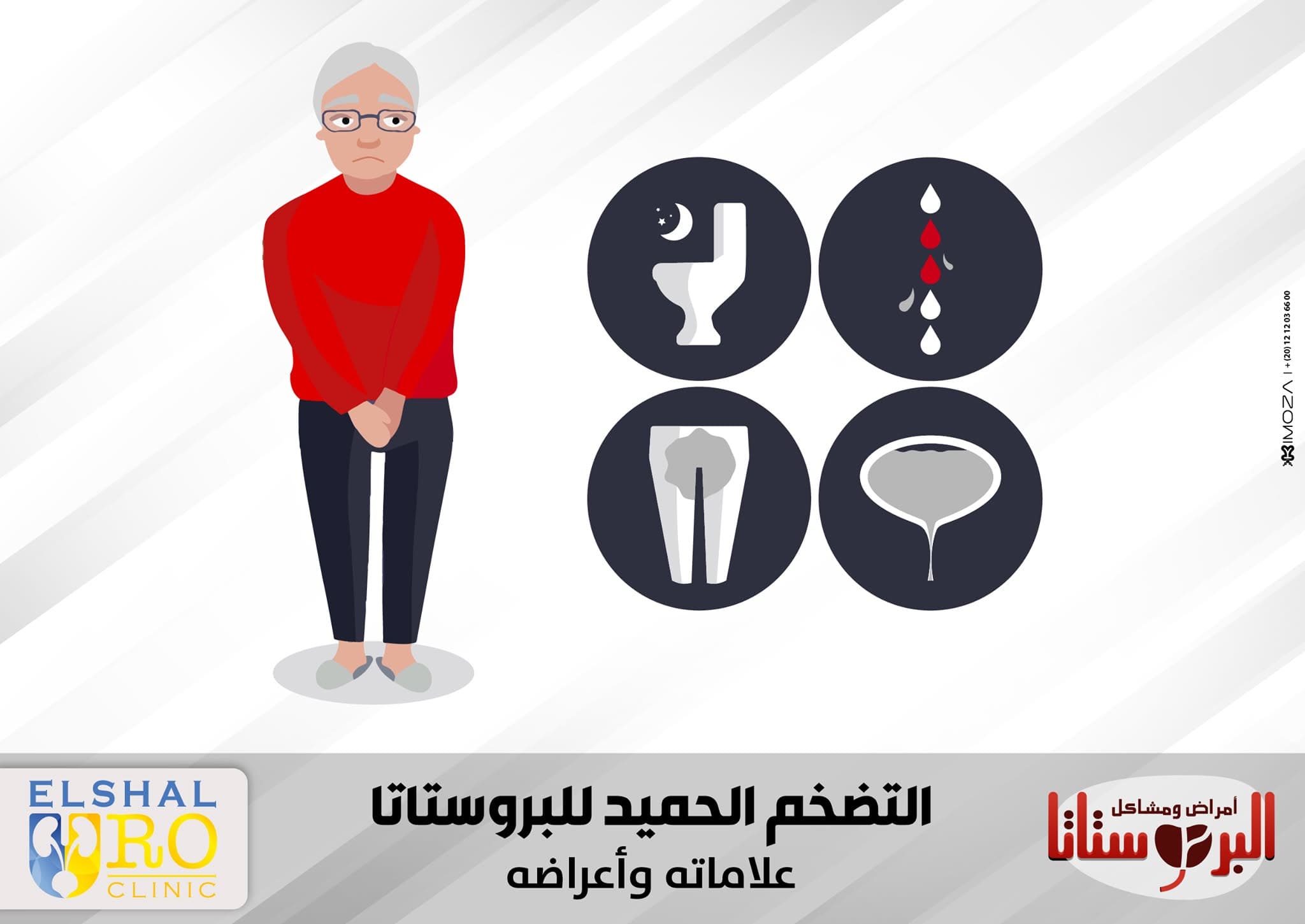
Benign Prostatic Hyperplasia is an important cause of narrowing and obstruction of the upper urinary tract, leading to urine retention and accumulation in the bladder, as well as difficulty in urination. These are the reasons for the symptoms that appear in the patient, which can be in the form of: 🔸Difficulty urinating that forces the patient to strain or push hard, which may cause blood to appear in the urine. 🔸The feeling that the bladder has not fully emptied after urination, along with a constant urge to urinate despite no urine being passed. 🔸Urine flow appearing as intermittent or weak despite straining. 🔸Dribbling of urine for a period after urination. 🔸Increased frequency of urination, especially at night and during sleep, and sudden urges to urinate at times. 🔸Involuntary leakage of urine due to the bladder being filled with a large amount. 🔸In severe cases, acute urinary retention may occur for a long time due to contraction of the internal sphincter muscle at the bladder outlet, and this acute retention causes severe pain and discomfort, and the patient may need to have a urinary catheter inserted to relieve the retention. There are some factors that may contribute to urinary retention in patients with benign prostatic hyperplasia, and it is important for the patient to avoid them as much as possible. These factors include: ⚠️ Lack of activity and movement ⚠️ Cold weather ⚠️ Sexual desire ⚠️ Suffering from constipation ⚠️ Certain medications such as antihistamines, cold medications containing decongestants, asthma inhalers, and other medications ⚠️ Alcohol consumption